The Thirty-Second Handover: Why a Quick Change Is Really a Trust Exercise
There is a particular sound in a theatre that tells you a quick change is about to happen. It is not the overture. It is not the click of a follow spot. It is the soft, rasping tear of Velcro coming apart behind a wing, followed by a dresser saying, very calmly, 'Arms up.'
If you have never stood in a quick-change corner, it can look like chaos with a costume rail. In truth, it is one of the most rehearsed spaces in the building. The thirty-second handover — performer in, performer out, costume off, costume on, cue not missed — is not really about speed. It is about trust, and the unglamorous preparation that makes trust possible.
The corner where the show actually tightens
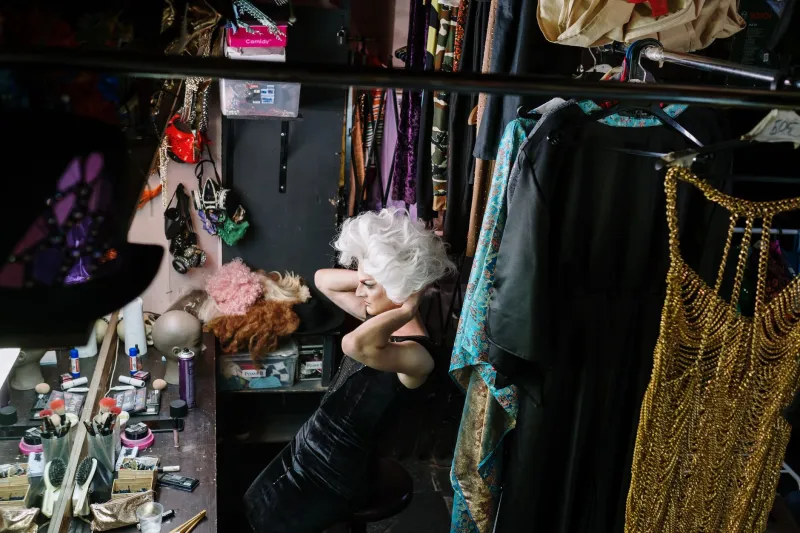
Quick-change corners are rarely photogenic. You will find a half-height rail, a stack of labelled boxes, a mirror angled for someone who is not really looking at their face, and a dresser with a pin cushion strapped to their wrist like a small, useful gauntlet. There is usually a stolen chair from the green room and a bicarb of soda near the water jug.
In regional houses and on touring dates, this corner moves. A mid-scale venue in Leeds might give you a proper wing with a screen and a table; a receiving house in Cardiff might give you a curtained-off slice of hallway and a prayer. The company adapts. The doctrine stays the same: everything in reach, nothing in the way, and a plan for when the plan goes wrong.
Speed is not the point
A good quick change is not won by frantic hands. It is won by rehearsal. The performer knows exactly where the dresser will be. The dresser knows exactly where the performer will be. There are agreed places to touch and agreed places not to. A strap is lifted, not grabbed. A zip is found by feel, not by fumbling. Someone says 'step' and someone steps.
That is why the best quick-change teams talk about consent as much as choreography. A performer's body is doing the work, and a dresser's hands are part of the show whether the audience sees them or not. The language is practical — 'May I?' 'Ready?' 'Left arm' — but it is also a small contract. You are allowed to say no. You are allowed to say slower. You are allowed to need a different plan. The clock is loud, but it is not the boss.
The kit that buys you ten seconds
Every quick-change corner has a kit, and every kit tells a story. Safety pins, obviously. Fishing line for a broken fastening. Spare tights in three shades that probably do not match. A small pot of talc. Strong magnets sewn into hems so a hem can be lifted and dropped without a single hook. Velcro, of course, which is why the doctrine has a name.
A dresser I once watched in a touring production kept a roll of double-sided tape and a pair of nail scissors in her apron. She used the tape to hold a collar flat during a chase sequence and the scissors to cut a thread that was catching on a sleeve. Neither fix was in the costume plot. Both bought the performer ten seconds of not thinking about the costume, which is ten seconds of thinking about the show.
What a good company rehearses
Here is the bit that does not make the programme notes: a good company rehearses the recovery. Not just the change itself, but the moment after, when a hook snaps or a shoe is missing or the wrong shirt has been hung on the wrong rail. The swing knows where the spare is. The stage manager knows who to tell. The dresser knows which repair can wait until the interval and which one cannot.
That is preparation as care. It is not sentimental. It is practical. It means a performer can walk into a wing with their heart going and their cue coming and trust that the people around them have already thought about the worst case. It means nobody has to be brave in a corner.
As we head into the 2026 panto season, with its twelve-second transformations and its inevitable glitter-related emergencies, it is worth remembering the quiet work behind the flash. The quick change is not a magic trick. It is a handover. And like any good handover, it works because someone rehearsed it until it felt ordinary.
After the curtain
The last part of the doctrine happens after the show. Costumes are un-Velcroed, checked, hung, and logged. Repairs are made or noted. The corner is reset for tomorrow. It is not glamorous, and nobody applauds it. But it is the reason the applause happened in the first place.