No Rider, No Nonsense: The Quiet Professionalism of the Village Hall Booking Sheet
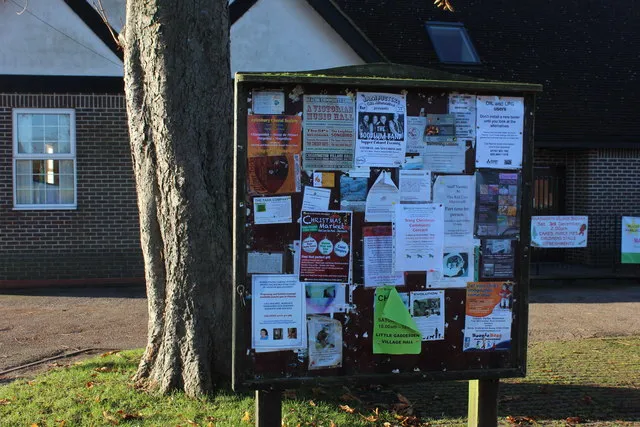
Photo: Robert Eva , CC BY-SA 2.0, via Wikimedia Commons
There is a particular kind of paperwork that smells faintly of instant coffee and floor polish. It lives behind glass on a noticeboard, or in a plastic wallet on the end of a trestle table, and it is usually written in pencil. A village hall booking sheet. Columns for date, time, hirer, deposit, balance, key returned. A column for notes, which is where the real story lives.
I have spent enough time around small-scale touring to know that these sheets are not quaint. They are not a charming relic of a bygone Britain. They are a contract, a memory aid and a character reference all at once, and they are often more professionally run than the inbox of a mid-level promoter who cannot commit to a date without three follow-up emails.
The grid is not a spreadsheet
A spreadsheet can hide. It can have tabs, filters, a legend in cell A1 that nobody reads. A village hall booking sheet cannot hide. It is a grid on a wall, and everyone who walks past can see that the Friday in March is taken, that the deposit has been paid, that the caretaker's number is in the margin because the boiler is temperamental.
That openness changes the tone of the conversation. You are not negotiating with an algorithm or a venue group's central bookings team. You are dealing with a volunteer who has a key, a hall, a committee and a very clear idea of what 'left as found' means. They do not care about your press quote. They care whether you can load in after the toddler group has finished and whether your bass amp will trip the circuit that also runs the urn.
What the sheet actually records
Look closely at the notes column on any hall booking sheet and you will find a rider written by people who actually run the building. 'Piano needs tuning.' 'No blackout.' 'Stage extension stored in cupboard, ask for Alan.' 'Bring own extension leads.' 'Please stack chairs by the fire exit, not in front of it.'
It is unsentimental and it is useful. Nobody is trying to impress you. Nobody is curating a brand. They are telling you what the room is, what it is not, and what they expect from you in return. In an industry that often specialises in vague holds and hopeful maybes, there is something bracing about a sheet that simply says: this is the deal.
A testing ground, not a sideline
The temptation is to treat village halls as a warm-up circuit, a place you play before you are 'real'. That is a mistake. These rooms are a testing ground precisely because they refuse to cushion you. There is no wing space. There is no blackout. There may be a piano, but it may have been there since 1974. The audience is not industry; it is people who bought a ticket because they live in the village and fancied an evening out.
That is the most honest feedback you will ever get. If the show works in a hall with a low ceiling, a noisy fridge and a caretaker who needs to lock up by half ten, it will work anywhere. If it does not, you learn something before you have spent a fortune on a tour van and a lighting designer.
The plain dealing premium
What strikes me most about these sheets is the economy of trust they represent. A deposit is paid. A date is held. A key is handed over. The hall is left as found. The balance is settled. Reputation travels not through a glossy brochure but through a parish clerk saying to another parish clerk: they were fine, they cleared up, they did not leave the place in a state.
Compare that with the rest of the industry, where a 'maybe' can hang in the air for weeks and a contract can take longer than the actual gig. The village hall sheet does not do maybe. It has a date, a name and a pencil mark. It is not romantic. It is just clear.
What the industry could borrow
I am not suggesting we romanticise volunteer-run venues or pretend that they are always easy. They are not. Some halls are freezing. Some committees are harder to pin down than a headline act. Some need you to bring your own everything, including patience.
But the sheet itself is a model of plain dealing. Say what is included. Name the constraints. Put the caretaker's number where people can find it. State the deposit. Confirm the date. Do not hide the awkward bits in a PDF attachment nobody opens.
The rest of the entertainment industry could learn from that. Not the nostalgia, not the folding chairs, but the clarity. The refusal to dress up a simple arrangement as something more complicated than it is.
The sheet as archive
Every village hall has a history of acts that passed through before they were known, or after they were known and needed a quiet night. The booking sheet remembers them all in the same handwriting. It does not care about your streaming numbers. It cares whether you returned the key.
So next time you see one of these grids on a noticeboard, do not walk past it. Read the notes column. It will tell you more about the business of entertainment than most panel discussions. And it will do it without a single slide deck.