The Lamp That Stays On: A Working Defence of the Ghost Light
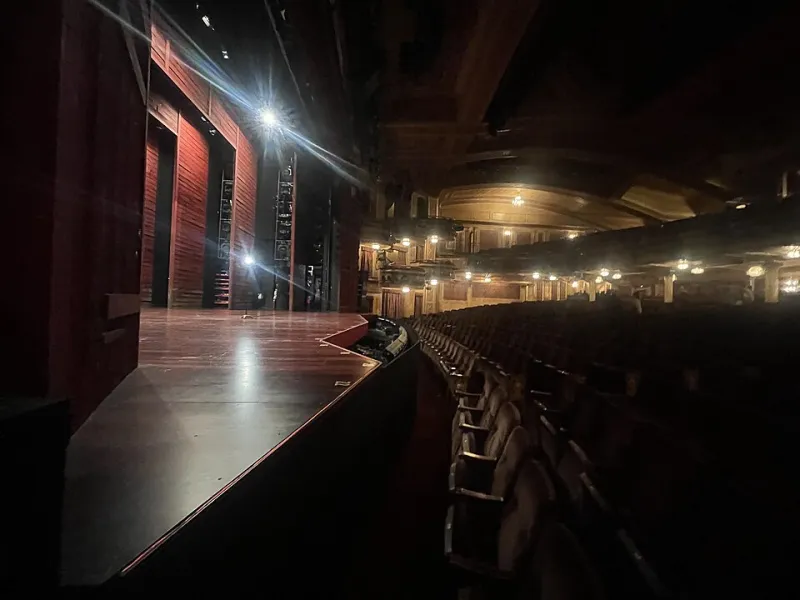
Photo: Averywlms, CC BY-SA 4.0, via Wikimedia Commons
Every theatre I have locked up has one thing in common: a lamp on a stand in the middle of the stage, doing its quiet little job while the rest of the building goes dark. It is called a ghost light, which is a lovely name if you like stories about haunted dressing rooms and a terrible name if you are trying to explain to a new duty manager why there is a light on in an empty auditorium at 1am. I am fond of it. Not in a spooky way. In a practical way.
What the light actually does
Strip away the folklore and the ghost light is a work lamp. It gives enough light for someone to cross the stage without falling into the orchestra pit, tripping over a stray flat or walking into a set piece that was not there at the end of the get-out. It lets a cleaner see the edge of the stage. It lets a venue manager check the building without turning on the full rig. It is a small, low-level signal that the space is being looked after.
A venue manager in Sheffield told me hers is an LED par on a weighted base, PAT tested every year and plugged into a circuit that the master switch does not kill. That last detail matters. There is no point in leaving a lamp on if the person locking up flicks the wrong breaker and turns it off. The lamp is not there to be atmospheric. It is there to stop an accident.
The myths and why they stick
The stories are fun. Every old theatre has a ghost, and every ghost apparently needs a nightlight. The ghost light is said to appease the spirits, or give them a stage to perform on after hours, or keep them from following the last person out. I have heard all three in one afternoon, usually from someone who is also holding a torch and a set of keys.
I do not want to ruin anyone's ghost story. But the ghost light is not spooky. It is a health-and-safety measure with good branding. The reason it stays on is not supernatural. It is because the alternative is a claim form, a broken ankle and a very awkward conversation with the insurer.
The bit nobody puts on a poster
In small UK venues, the ghost light is a compromise. It has to be bright enough to be useful and dim enough not to waste electricity or disturb neighbours. It has to be stable enough to survive a cleaner's trolley and low enough not to be a trip hazard itself. It has to be on the lock-up sheet, not just in someone's head. And it has to be checked, because a lamp that has been on since 2019 is not a safety measure; it is a bulb with a reputation.
One technician I spoke to said his venue uses a timer in summer so the lamp is not burning all night in an empty building. Another said they swapped to LED years ago and have never looked back. Neither of them mentioned ghosts. Both of them mentioned the fire exit.
A short checklist for locking up
- Is the lamp stable, weighted and clear of walkways?
- Is the cable taped down and kept away from fire exits?
- Is it PAT tested and on the lock-up sheet?
- Is it plugged into a circuit that stays live when the master switch goes off?
- Is there a torch by the stage door as backup?
- Is the building actually secure? A ghost light is not a security system.
- Does someone know it is on, and does someone know when it should go off?
A small ritual worth keeping
I like the ghost light because it is a small act of care. It says someone will be back. It says the building is not abandoned, just resting. It says the person who locked up thought about the person who will open up. That is not superstition. That is professionalism with a nice shadow.
So leave it on. Check the cable. Put it on the sheet. And if anyone tells you it is there to keep the ghosts happy, let them have it. The ghosts are not the ones who need to see where they are going. We are.