The 7.30 Curtain and the 22.14 Train: A Promise the Timetable Cannot Keep
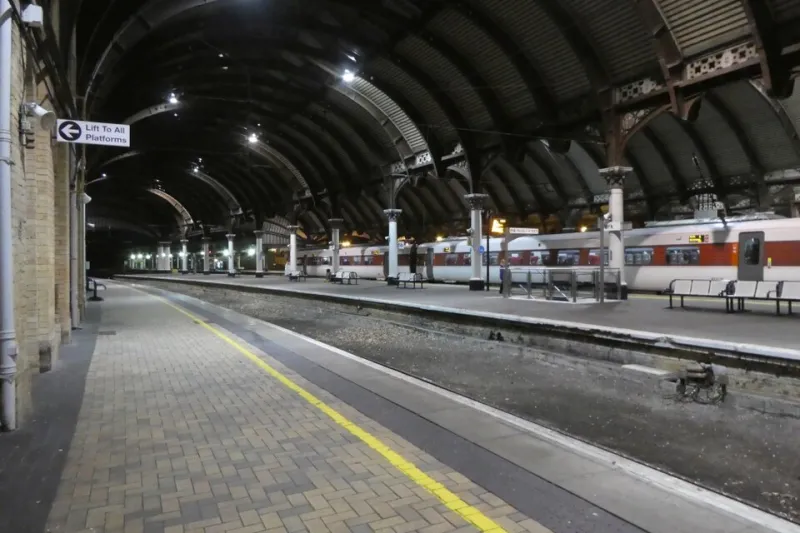
Photo: DS Pugh , CC BY-SA 2.0, via Wikimedia Commons
The applause is still going when the first person checks their watch. Not because they are bored. Because the last train leaves in eleven minutes and the station is a fifteen-minute walk from the foyer. By the time the cast take their third bow, that person is already reaching for their coat. By the time the house lights come up, they are gone. They loved the show. They just could not afford to miss the 22.14.
This is not a London problem. In London, the tube runs late enough that a 7.30 curtain is annoying rather than impossible. In Leeds, Bristol, Newcastle, Cardiff, Glasgow, Norwich and a hundred smaller towns, the last service is often the only service. A 7.30 start is a tradition. The railway timetable is not. And in 2026, with evening frequencies still thinner than they were a decade ago, the gap between the two is getting harder to ignore.
The tradition is not the problem
A 7.30 curtain is a good idea in theory. It gives people time to get home from work, eat something, and still be in their seat before the lights go down. It is the standard for a reason. The problem is that the standard was built for a world where the last train left later, or where audiences drove, or where a taxi home did not cost the same as a ticket.
Regional theatres cannot fix the rail network. They cannot magic up a 23.30 service from a market town. But they can stop pretending that a 7.30 start is a neutral choice. It is a promise. And the railways do not keep it.
The maths of a 7.30 start
A two-hour-forty show with a twenty-minute interval ends at 22.30. Add five minutes of applause and four minutes to get your coat. That is 22.39. The 22.14 has gone. Even a two-hour-thirty show with a fifteen-minute interval ends at 22.15, which is not a train you can catch; it is a train you can watch leave.
Interval length matters more than venues admit. Twenty minutes is convention, but it is also long enough for the bar queue to eat the whole break and for the second half to start late. A fifteen-minute interval is not a scandal. It is a small scheduling choice that could put a hundred people on an earlier train.
Who gets left behind
The people who miss the last train are not a niche. They are the audience member with a wheelchair who needs extra time to leave the auditorium. They are the teenager who cannot afford a taxi. They are the low-income family who booked the cheap seats and did not factor in a £35 ride home. They are the woman who does not want to walk twenty minutes to a station in the dark. They are the non-driver in a town where the bus stops at 21.00.
Accessibility is not just about ramps and hearing loops. It is about whether a disabled patron can actually get home after the show. A venue that programmes a three-hour epic on a Sunday evening and then advertises it as accessible is not telling the whole truth. The building might be accessible. The journey is not.
Small changes that actually help
Venues cannot reroute the railways. But they can do a few unglamorous things.
Publish the last train time on the show page. Not in the small print. Next to the running time. If the last service is 22.14, say so. Let people decide before they book.
Offer a small number of earlier curtains. Not every night. A Thursday 7pm performance. A Sunday 6.30pm. A relaxed matinee. See what happens. Some audiences will bite.
Shorten the interval. Fifteen minutes instead of twenty. It sounds trivial. It is not.
Talk to the local bus operator. Not the national rail company. The bus that stops outside the venue at 22.40 is just as useful as a train from the station.
Set up a taxi share board in the foyer. Not a formal scheme. A clipboard. A member of staff who knows the local firm. It is not a transport policy. It is a start.
Programme shorter shows on Sunday nights. A 90-minute one-act is a gift to anyone who has to get home.
The honest compromise
I know why venues keep the 7.30 curtain. Touring contracts, cast agreements, bar income, habit. A later start is not always possible. An earlier start is not always popular. There is no perfect answer that makes everyone happy and keeps the bar take up.
But there is a difference between a venue that has thought about the last train and one that has not. The first puts the time on the website. The second lets people find out on the platform.
A 7.30 curtain is a promise that the evening will be worth leaving the house for. The railways do not make the same promise. The least venues can do is stop writing cheques the timetable cannot cash.