The House Lights Are Still Up: What a TV Warm-Up Comic Really Does
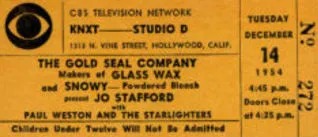
Photo: CBS Television, Public domain, via Wikimedia Commons
You know the bit. You have queued outside a studio in Elstree or Salford, shown your ticket three times, been scanned, herded, and seated. The floor manager has said something encouraging about switching off your phone. And then, because television never starts exactly when it says it will, there is a gap. That gap is where the warm-up comic works.
It looks like filler. It is not filler. Or rather, it is filler the way a foundation is filler under a house. Nobody thanks it at the end, but without it the whole thing sits badly.
The room before the room
A studio audience is not an audience yet. It is a queue that has been moved indoors. People have travelled in from Croydon or Stockport, they have had a rushed sandwich, they have had an argument about parking, and they are wearing a coat because studio ventilation is its own climate. Half of them are excited. Half are wondering how long it takes to get home. Some have been to a recording before and think they know the drill. Some are convinced they will end up on telly and have dressed accordingly.
The warm-up comic has to turn that into a room. Not a crowd, necessarily. A room. A group of people who understand what is about to happen, what is expected of them, and what is not. It is part hosting, part crowd control, part reassurance, and part live comedy. The best ones make it look like a chat.
Not a human countdown timer
The lazy version of the job is a man with a microphone telling you to whoop. There is a lot of that about. But a good warm-up is not a volume knob. It is a negotiation conducted in real time. The audience needs to know when to laugh, when to clap, when to sit still for a retake, and when the recording has actually started. They also need to know they are not going to be humiliated.
That last part matters more than people admit. A studio audience is a captive one. You cannot easily leave once you are seated in row C, and everyone knows it. So the warm-up comic is working with a room full of people who have tacitly agreed to be a bit vulnerable. The good ones never forget that. They tease, but they do not corner. They ask for energy, but they do not scold. They read the room well enough to know the difference between a group that wants to be silly and a group that wants to be left alone until the show starts.
Reading the temperature
I have sat in audiences where the warm-up was essentially a stand-up set and audiences where it was more like a friendly briefing. Both can work. What does not work is a warm-up that ignores the actual room. A midweek corporate audience in a studio in west London is not the same as a Saturday-night crowd who have made a day of it. A student audience will give you noise quickly and then lose interest just as quickly. An older audience might take longer to warm up, but once they are in, they are in.
The craft is in the diagnosis. Can you tell, in the first two minutes, whether this room wants to be picked on or talked to? Can you tell whether the hen party in row F is going to be helpful or a running problem? Can you tell when a delay has soured the mood and the job is now less about laughs and more about keeping people on side? That is not filler. That is a performance skill with a very specific brief.
The retake problem
One of the least glamorous parts of the job is preparing an audience for the fact that television is made in pieces. The show may stop. Someone may fluff a line. A camera may need to reset. The audience may be asked to laugh again at something they have already laughed at, or to clap as if they have just seen something for the first time. A good warm-up comic makes that feel normal without making the audience feel daft.
That is a delicate bit of diplomacy. You are asking people to be sincere on cue. The worst warm-ups treat the audience like a laughter machine and then get huffy when the machine is tired. The best ones explain the drill, keep the mood light, and give everyone permission to be a bit rubbish at it. They also know when to stop. There is a point where more warm-up is not more energy; it is just a room getting bored before the thing has even begun.
What audiences notice
When a warm-up is done well, most people do not notice it at all. They notice that the show feels alive. They notice that the first laugh comes easily, that the applause is not ragged, that the silences between takes do not feel awkward. They notice that they are not terrified of being singled out, and that the person with the microphone seems to know where they are and why they are there.
When it is done badly, they notice that too. They notice the forced whooping. The endless waiting. The sense that the audience is being managed rather than welcomed. They notice a room that has been told to have fun rather than helped into it.
The warm-up comic disappears once the recording starts. No credit, no applause, no repeat booking for the audience to think about. But it is a proper job, and a proper performance. It is the first act of the night, played to a room that has not decided yet whether it is an audience. If the show feels effortless, someone has already done the work.