Mind the Knees: Why Row F Says Sorry Before It Says Anything Else
There is a particular sound in a British theatre that arrives just before the lights go down. It is not the rustle of a programme or the pop of a prosecco cork. It is the low, polite chorus of “sorry — sorry — excuse me — sorry” as half a row stands up to let one person past. By the time the latecomer has reached their seat, they have apologised to eight people, a handbag, and possibly a coat that was never going to move anyway.
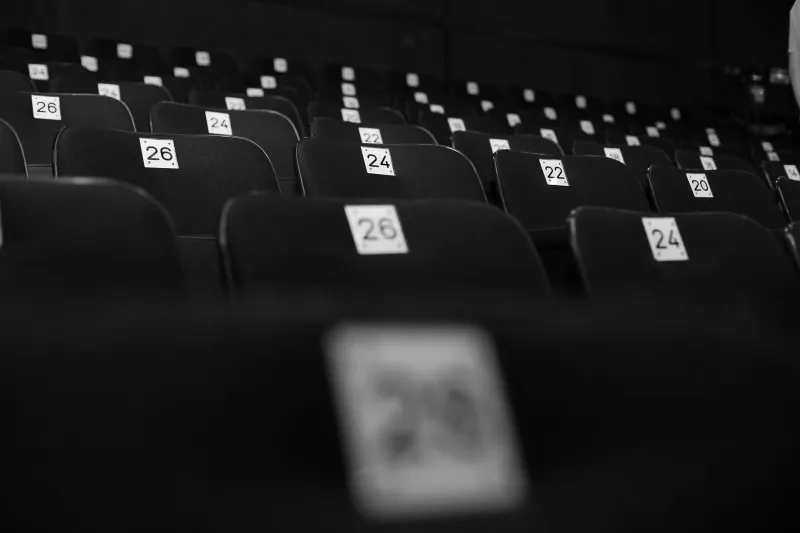
Row F knows this better than most. It is close enough to the front to feel the draught from the doors, far enough back to be caught in the middle of the squeeze, and usually home to at least one person who has brought a bag of Werther’s Originals with the wrapper discipline of a fox in a bin bag. I have sat in Row F. I have been the apologiser. I have also been the one sighed at. It is a shared civic experience, and it deserves a proper look.
The word that does a lot of extra work
“Sorry” in a theatre is rarely a full apology. Most of the time it is a lubricant. It means “I am about to inconvenience you for four seconds”, “I know this is awkward”, or “please do not think I am the sort of person who chooses to climb over knees for fun”. It is doing the job that a wider aisle, a clearer seat number, or a slightly less ambitious seating plan should be doing instead.
And that is the interesting bit. We treat these moments as a failure of audience manners, but a lot of them are a failure of architecture. Old venues are beautiful and impossible. Theatres built when audiences wore fewer layers and carried smaller bags now ask grown adults to perform a kind of seated obstacle course while holding a drink, a coat, and a vague sense of social shame. The apology is not really about the person climbing past. It is about the fact that the room has made a normal action feel like a transgression.
What Row F is actually apologising for
Squeezing past knees is the obvious one. But sit in Row F for a season and you notice a whole taxonomy of sorry. There is the sweet-wrapper sorry, hissed through teeth while the quiet bit of Act Two is happening. There is the cough sorry, which is really a request for permission to have a body. There is the phone-check sorry, which is less an apology and more a confession. There is the “sorry, is this seat taken?” sorry, usually delivered to someone who has already put their coat on it.
What links them is confidence. Or rather, the lack of it. A lot of British theatregoers behave as though they are guests in someone else’s very tidy living room, and that any normal human noise — breathing, moving, needing the loo — is a breach of house rules. Some of that is charming. Some of it is exhausting. And some of it is covering up the fact that nobody has told them what is actually acceptable.
The design problem dressed as bad manners
Front-of-house staff see this every night. Ushers watch people apologise for asking where the toilets are, for needing a step-free route, for wanting to know if the bar takes card. None of those things require a sorry. They require clear signage and a venue that has thought about how people actually move through a building.
Backstage, the same thing plays out in sound. Stage managers know that the last ten minutes before curtain is a symphony of apology: someone in the auditorium moving seats, someone in the wings whispering “sorry, sorry” as they reset a prop, someone in the box office saying sorry for a ticket that was always going to be collected late. It is not rudeness. It is a culture of low-level guilt that has attached itself to a night out.
When sorry is just noise
The honest opinion bit is this: not every apology is courtesy. Some are a way of continuing to do the annoying thing while technically acknowledging it. The person who unwraps a boiled sweet one crinkle at a time during the quietest monologue is not really sorry. They are sorry-adjacent. The person who checks their phone with a cupped hand and a whispered “sorry” is asking for absolution, not offering an apology.
There is a difference between “I am sorry I disturbed you” and “I am sorry you noticed”. The first is genuine. The second is a social manoeuvre. And audiences can tell the difference, even if they are too polite to say so.
The venue’s share of the blame
A good theatre reduces the need for sorries. It gives you enough legroom to let someone past without a full-body negotiation. It sells sweets that do not sound like a small fire. It tells you before the show that you can leave your seat if you need to, and that the ushers will help. It does not make you feel like a nuisance for needing the accessible entrance or asking for a large-print programme.
That is not about mollycoddling. It is about confidence. An audience that knows where it stands is an audience that does not need to apologise for existing. And a venue that has thought about the interval queue, the bar layout, and the width of Row F is a venue that has already said sorry on your behalf.
A better kind of courtesy
So here is the Row F manifesto. Keep saying sorry when you mean it. Say it when you arrive late and block a view, when you cough through the big speech, when you have to climb over six people because the aisle is a rumour. But do not apologise for needing the loo. Do not apologise for being a person in a seat. And do not let a venue convince you that its cramped rows are your bad manners.
The best theatres make room for people. The best audiences make room for each other. And the very best apology is the one you do not have to make because someone thought about the seat plan in the first place.