The Room Before the Show: Why the Music Matters More Than We Admit
Photo: Abdulhariss, CC BY 4.0, via Wikimedia Commons
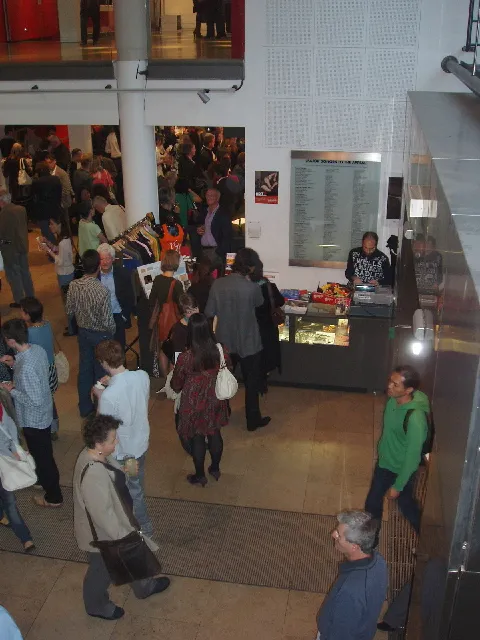
The house is half full. The bar queue is not moving. Somewhere behind a door, a sound engineer is playing the same song they have played before every comedy gig for years, and nobody in the room is paying attention. That is the strange power of the pre-show playlist. It is the warm-up act nobody claps.
I noticed it properly at a comedy club in Manchester recently. The room was filling slowly. The playlist was a run of 90s hip-hop and one unexpectedly sincere ballad. By the time the compere walked on, the audience was already loose. Not drunk. Not rowdy. Just warm. The music had done the equivalent of a hand on the shoulder.
The five minutes before
A pre-show playlist is easy to ignore. That is part of its job. It plays while people find seats, argue about coats, check phones and wonder whether they have time for an ice cream. It is background. It is also a creative choice, and it shapes the room more than most venues admit.
Before curtain-up, an audience is in a strange state. They have travelled. They have queued. They are in a room with strangers. They are waiting. The pre-show playlist fills that gap. It sets tempo. It tells people whether to talk or hush. It covers the sound of 300 coats being taken off. It gives the room a personality before the show has begun.
What a playlist is actually doing
A good playlist is dramaturgy by stealth. A play about grief might use sparse, melancholic music. A panto might use pop. A comedy club might use indie or hip-hop to signal irreverence. A jazz venue might use jazz, but not always the obvious jazz. The music is not the show, but it is part of the show.
It also has a practical job. Volume needs to be loud enough to fill the room but not so loud that people have to shout. Timing matters. A playlist that ends with a song fading just as the house lights dim feels intentional. A playlist that cuts off mid-chorus feels like someone pulled the plug.
The default problem
The problem is that the pre-show playlist is often nobody's job. It is a Spotify account logged into a venue laptop. It is a staff member's phone on shuffle. It is the same compilation CD that was in the drawer a decade ago and has somehow survived every office move. It is not bad music, necessarily. It is just not a decision.
Some venues default to the same tired compilation: the greatest hits of the 80s, a smooth radio playlist, a shuffle of Adele and Ed Sheeran. There is nothing wrong with those songs. There is something wrong with hearing them in every venue in the country. It makes the room feel generic. It makes the show feel like a product.
Other venues nail it. A sound designer I know builds a 25-minute playlist that ends with a track timed to the minute the house goes to half-light. A regional theatre I visited recently had a playlist of local artists, all credited on a small screen by the bar. A comedy club in Bristol plays a run of songs that are funny without being jokes. These are small choices. They add up.
A modest proposal
Not every venue needs a bespoke soundtrack. A touring production may bring its own music. A church hall does not need a mood board. A venue with no budget should not be shamed for using a streaming playlist. But every venue can ask a simple question: does this music belong to this room, this show and this audience?
That might mean giving one person responsibility for the playlist. It might mean asking the show's creative team what they want. It might mean turning the volume down by two notches. It might mean retiring the same compilation and making a new one. It might mean letting the front-of-house team choose, because they know the room better than anyone.
The pre-show playlist is not the main event. It is not the thing people talk about on the way home. But it is part of the bill. It is the first thing the audience hears and the last thing they hear before the show begins. We should treat it like a creative choice, not an afterthought. The warm-up act nobody claps is still doing a job.