The Last One Out: What a Theatre Does After Midnight
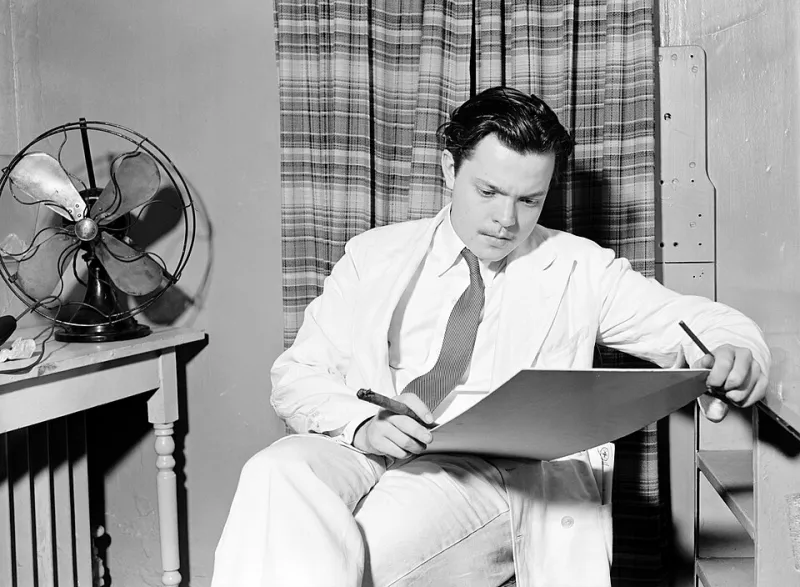
Photo: Federal Theatre Project, Public domain, via Wikimedia Commons
It is 11.47pm on a wet Tuesday in November 2026. The front-of-house doors are locked, the last taxi has swallowed the final audience member, and the pavement outside smells of chips and rain. Inside, the theatre is not empty. It never really is.
There is a single bulb burning somewhere near the middle of the stage. No shade, no glamour, just a practical little light on a weighted base. If you have ever left a UK theatre by the stage door, you might have glimpsed it through a fire exit window and assumed it was an accident. It is not. That bulb is the ghost light, and it is one of the oldest after-hours habits we have.
The bulb that stays on
The romantic explanation is that the ghost light keeps the theatre's resident spirits company. The practical one is that it stops a person walking into the orchestra pit in the dark. Both can be true. Theatres are good at holding two ideas at once: the poetic and the health-and-safety-compliant.
I have heard stage managers describe the ghost light as a night light for the building. I have also seen one rigged with a note taped to the stand that read, 'Do not unplug. Yes, really.' That is the tone of after-hours theatre in this country. Superstition with a maintenance schedule.
In the old gas-lit days, the ghost light was partly about pressure and naked flame, a way of managing a building that could be dangerous when everyone went home. Now it is LED, or should be, and the real work is less spectral. Someone still has to check the dimmers, lock the fly floor, walk the backstairs and make sure the kettle is off. The ghost light gets the folklore. The checklist gets the job done.
The building exhales
There is a particular sound a theatre makes once the audience has gone. It is not silence. It is the creak of seating settling, a distant extractor fan, the click of a relay, the odd groan from pipework that has been waiting all evening to complain. Front of house becomes a different place without queues. The bar looks oddly vulnerable with its pumps switched off. The foyer carpet, which seemed fine at 7pm, now looks like it has seen things.
For the people who work there, this is the bit audiences never see. The get-out. The notes. The laundry. The props table being reset. The stage manager's report, which is part diary, part incident log, part love letter to the next person on shift. In regional theatres and receiving houses, this is often done by a small team on tight hours. In the West End, it can look like a small army in black. Either way, the building is being handed over from performance mode to caretaker mode.
I once watched a backstage crew in Leeds reset a panto set at half past midnight while eating cold pizza from a box balanced on a prop throne. It was not glamorous. It was the most theatre thing I have ever seen.
Superstition with a maintenance schedule
The ghost light is not the only ritual. There are the ones we repeat because they work, and the ones we repeat because stopping feels unlucky. Whistling backstage is still avoided in many houses, even by people who could not tell you why. The 'Macbeth' rule is treated with varying levels of seriousness, depending on how tired the company is and whether anyone has managed to break the curse by swearing, spinning around or leaving the dressing room to find a grown adult willing to do it properly.
Then there are the small habits that are not superstition at all, just memory. The stage door keeper who signs in the night watch with the same biro. The note left on the desk for the morning technician. The final walk-round that always starts stage left because that is how the last person did it.
These habits matter because a theatre is not a neutral box. It is a workplace, a listed building, a community asset and, on a good night, a kind of collective hallucination. After the show, the hallucination stops. The work continues.
The night watch and the 3am walk-round
Not every theatre has a night watch now. Budgets are tight, and some buildings rely on alarms, CCTV and a contracted security firm. But many still have someone on site, or nearby, whose job is to be the responsible adult for a building full of expensive kit, old wiring and fire doors that must stay shut.
The walk-round is not dramatic. It is torches, keys, a clipboard and a mug of tea. Check the stage. Check the pit. Check the dressing rooms. Check that the iron is off and the wardrobe steamer has been left somewhere sensible. Listen for the alarm panel. Look at the fly floor. Try not to think about the story the last tour told you about the wardrobe mistress who still checks the quick-change rail.
I like knowing that this happens. I like the idea that a theatre is not simply switched off at the end of the night. It is handed over. Someone is responsible for the quiet hours. In a country that often treats culture as a nice extra, there is something stubborn and rather moving about that.
Why audiences should care
You do not need to know the name of the ghost light to enjoy a show. But the after-hours habits tell you what kind of place you are in. A theatre that looks after its building after midnight is usually a theatre that looks after its people during the day. Not always. Not perfectly. But usually.
It also explains why some venues feel different from others. The ones with a living backstage culture have a particular atmosphere. They are not just receiving a product. They are keeping a building alive between performances, and that work leaves a trace. You can feel it in the warmth of the stage door, the state of the noticeboard, the fact that someone has bothered to label the light switches.
So next time you leave a theatre and the doors close behind you, spare a thought for the bulb still burning inside. It is not there to haunt anyone. It is there because the building is still on shift.
And if you are the last one out, do not unplug it. Yes, really.