The Board by the Stage Door: Why the Understudy Is Part of the Show
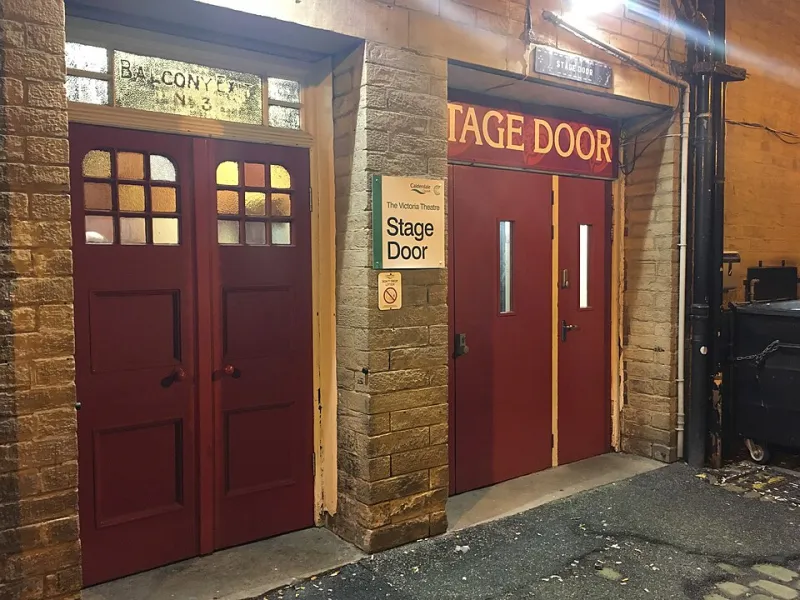
Photo: Peter Evans, CC BY-SA 2.0, via Wikimedia Commons
There is a particular sound a theatre makes when the audience reads the name on the board by the stage door and realises it is not the one they expected. It is not quite a groan. It is more of a collective rustle — programmes shifting, whispers travelling along a row, someone saying “oh, she’s not on” in the tone of a person who has just been told the trains are delayed. Then the lights go down, and the show begins anyway.
That moment is where the understudy lives. Not in the glossy photographs, not in the trailer, not usually in the review. In the gap between what was advertised and what is about to happen. And having spent enough time in and around UK theatres to know that the gap is not a flaw in the system but part of it, I think we talk about understudies badly. We talk about them as a backup plan. They are more like the show’s immune system.
The call that rearranges a day
A star is off. It might be a bug, a family emergency, a back injury, a voice that has decided to leave the building. The company manager makes calls. The stage manager updates the board. The understudy — who may have been in the building since midday, or may be on a train, or may be halfway through a supermarket shop — becomes the person the evening depends on.
What the audience sees is a name change. What the building sees is a chain reaction. The dresser knows which quick changes are now different. The sound department is checking mic plots. The fight captain is running the combat one more time, because the person who usually does that scene is not the person doing it tonight. Somebody is texting the front of house team so the printed notices are right. Somebody else is quietly making sure the understudy has water, a throat sweet, and five minutes without being asked how they are feeling.
It is not glamorous. It is a high-wire act performed in a costume that may have been altered in a hurry, with a brain full of blocking that was learned in a rehearsal room at 10am and is now being asked to hold up in front of 900 people.
The half-costumed rehearsal nobody reviews
Understudy rehearsals are one of the odder rituals in British theatre. They happen in the gaps — before the show, after the show, on a Monday when the building is supposed to be quiet. Often they are done in bits and pieces, in jeans and trainers, with a stage manager reading in and a director or resident director watching the shape of the thing. Sometimes the understudy is “walking” the role while the usual actor is on stage in the evening. Sometimes they are doing it with half the cast, half the props, and a lighting state that is mostly “house lights up, please”.
That is not a lesser version of the show. It is the show being kept alive. The understudy is not learning lines in a vacuum; they are learning the rhythm of a particular company, the way this actor takes a pause, the way that door slams, the way the audience laughs at a line that is not supposed to be funny. They are learning the show as it is, not as it was written.
And then, on the night, they have to pretend they have always been there. That is the job. Not to be a tribute act. Not to be a photocopy. To be the character in the same story, with the same cues, the same set, the same band, and their own pulse.
The audience’s mixed feelings are fair — up to a point
Let’s be honest about the audience side. People book months in advance. They save up. They bring a friend who has never been to the theatre. They are allowed to feel a small pang when the name changes. That is not rude; it is human. The theatre is one of the few places where we still expect the exact person we paid to see, even though we know, somewhere in the back of our minds, that actors are not machines.
But there is a line between disappointment and disrespect. I have heard people sigh loudly at the board as if the understudy has personally cancelled their evening. I have also seen audiences give the understudy the warmest, most generous reception of the night — not because they are being charitable, but because they can feel the stakes. There is something electric about watching someone who knows they have one shot at this particular audience, on this particular night, in this particular building.
The understudy is not a contingency plan. They are a living part of how a show survives. Without them, every cold, every twisted ankle, every family emergency would be a cancellation. With them, the show goes on — not as a compromise, but as a different valid version of the same thing.
Why we should review the cover
Here is the bit that still bothers me. Understudies are rarely reviewed on their own terms. If a critic comes on a night when the lead is off, the review often becomes a story about the absence. “With X indisposed, Y stepped in.” That is a fact, but it is not a critique. It treats the performance as a footnote to someone else’s biography.
That is a shame, because an understudy performance is not a pale imitation. It is an interpretation made under pressure, in public, with very little rehearsal and a great deal of nerve. It deserves to be looked at properly — the choices, the timing, the way they hold the stage, the way they handle the bits that are usually hidden by a more familiar reading. If we can review a preview, a transfer, or a cast change, we can review a cover.
So next time the board by the stage door has a different name on it, give it a second look. Somebody has spent the day rearranging their life so that your evening can happen. The least we can do is watch them as if they are the show — because tonight, they are.