The Bit Between the Acts: What Your Interval Queue Says About Your Venue
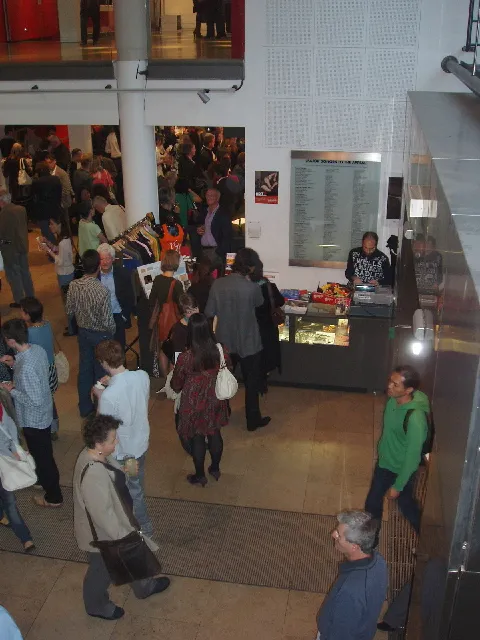
Photo: David Hawgood, CC BY-SA 2.0, via Wikimedia Commons
The house lights come up and half the auditorium makes the same silent calculation: loo first, or ice cream first? The interval bell hasn't rung yet, but the queue has already started forming. And in that queue — the shuffling, the card-machine beeps, the usher pointing vaguely towards the stairs — you can read a venue's entire personality.
I've spent enough time backstage and front of house to know that the interval is not a pause. It's a scene. It's the bit where the audience decides whether they trust you enough to come back after the break, whether the building respects their time, and whether the £6 tub of ice cream is a treat or a dare. The small operational choices are creative choices. They just don't get a credit in the programme.
The queue is the review nobody writes
Nobody puts the interval in the press release. The marketing copy talks about the show, the cast, the 'unmissable' season. But ask a theatregoer what they remember about a night out and you'll often get the bar queue, the confusing signage, or the fact that the accessible loo was locked and nobody could find a key.
A West End juggernaut can absorb a bad interval because the audience has already bought the souvenir mug. A regional receiving house cannot. The interval is where a venue shows its manners. It's where a first-time visitor decides whether they belong. It's where a regular decides whether to renew.
Ice cream economics: the honesty of a price list
I don't begrudge a venue making money on a tub of ice cream. Margins are thin, and the bar is part of the business. But pricing tells a story. If the only affordable thing at the interval is a bag of own-brand crisps, the message is clear: we'd rather upsell than welcome.
The best interval operations I've seen do three things well. They price at least one item as a genuine thank-you, not a test of loyalty. They open enough tills so the queue moves. And they make it obvious where the money goes — a sign saying 'Every tub helps fund our youth theatre' is not a gimmick; it's a relationship.
Also, card-only queues in a listed building with one spotty signal are not a personality trait. They're a bottleneck.
Signage is a love letter or a shrug
You can tell a lot about a venue from its signs. A good sign answers the question you're too polite to ask. A bad sign assumes you already know the building.
The worst interval signage is the passive-aggressive kind: 'Toilets' with an arrow that points to a corridor with no further clues. The best is specific: 'Ladies, gents and accessible loo: through the bar, past the cloakroom, 40 seconds.' That's not hand-holding. That's hospitality.
And while we're here: if the accessible toilet is also the stock cupboard, that's not an accessibility policy. That's an obstacle course with a hand dryer.
The loo line is a design flaw with a spotlight
Not every venue can rebuild its plumbing. I know that. Old buildings have old bones, and the interval is a pressure test. But you can still staff the queue, sign the queue, and say sorry like you mean it.
The venues that get this right treat the loo line as part of the show. They put an usher at the bend. They open the accessible loo to anyone who needs it. They announce the second half from the bar, not just the auditorium. They understand that a five-minute delay to the second act is not a disaster, but a five-minute delay with no information is.
A practical interval audit for venues
If you want to treat the break as part of the performance, here's a checklist I'd genuinely pay to see in a season brochure:
- Time the queues. Not at press night. On a wet Tuesday in February. If the bar queue is longer than the interval, fix the staffing.
- Walk the route. From the back of the stalls to the loo and back. If you get lost, so does your audience.
- Price one thing kindly. A £2.50 squash or a £3 tea is not going to break the bank, but it tells people you're glad they came.
- Brief front of house. Not just 'the loos are left'. Give them the real answers: accessible routes, quiet spaces, card issues, interval timings.
- Sign the awkward bits. Where the queue starts. Where the accessible entrance is. How long the second half is. Whether there's a post-show talk.
- Announce clearly. One calm voice beats three confused ones. And please, not the same recorded message that sounds like a fire drill.
Treat the break like a scene
The interval is not dead time. It's the audience's chance to talk about the show, buy a drink, queue for the loo, and decide how they feel. The venue is the set. The staff are the company. The signage is the script.
Get it right, and nobody notices. Get it wrong, and it becomes the story. That's the thing about hospitality: it's invisible when it works, and unforgettable when it doesn't. So next time the bell rings, don't ask how to get people back to their seats. Ask what kind of interval you're putting on.